
What players say
Ring Rumble Tag Team succeeds by keeping its core simple. The arena-based format forces players to think about every step, while items add just enough variety without overwhelming the main objective. Matches are quick and tense, with each round feeling distinct due to player positioning. The cartoon visuals and lack of graphic content make it a safe choice for family gaming. Its main strength is accessibility: anyone can pick it up and have fun immediately, yet there is room to develop real skill. For a straightforward two-player party game, it delivers exactly what it promises.
About this game
Core Arena Mechanics
Ring Rumble Tag Team centers on a simple but engaging objective: stay on the platform while forcing your opponent off. Each match takes place in a circular arena with no walls, so every step matters. Players can perform basic moves like shoves and sweeps to unbalance their rival. The game rewards careful footwork and patience over frantic button pressing. A single misstep near the edge can cost you the round, which keeps tension high throughout every encounter.
Item Placement and Strategy
Scattered around the arena are various objects that players can pick up and use. These items might include things like balls or boxes that can be thrown to disrupt an opponent's position. Grabbing an item at the right moment can create an opening, but it also leaves you vulnerable for a second. Deciding when to go for an item versus when to press an attack adds a layer of decision-making beyond simple movement. Smart players learn to bait opponents into chasing items, then counter when they commit.
Visual Style and Atmosphere
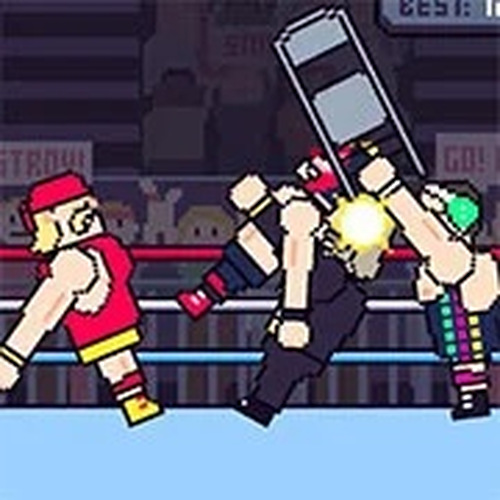
The game uses bright, cartoon-like graphics with exaggerated character animations. Each character has a distinct look, though all share a playful, non-threatening design. The arena itself features colorful patterns and subtle visual cues that help players judge distances. Sound effects are light and bouncy, matching the game's casual tone. Nothing in the presentation suggests violence or intensity, making it suitable for younger players or family gaming sessions.
Match Flow and Rounds
Each match consists of several short rounds. After a player is knocked off, the arena resets and a new round begins. The first to win a set number of rounds claims victory. This structure keeps matches quick and encourages players to adapt their strategy between rounds. Because the arena is the same each time, players can focus on improving their technique rather than learning new layouts. The round-based format also makes it easy to jump in for a few minutes or play a longer session.
Two-Player Focus
As the name suggests, the game is built around two-player competition. Whether playing with a friend on the same device or against an AI opponent, the experience remains centered on direct head-to-head play. There are no teams or complex modes to learn. This simplicity makes it an excellent choice for quick gaming sessions where setup time should be minimal. The AI provides a consistent challenge for solo practice, but the real enjoyment comes from facing another person.
Accessibility and Learning Curve
New players can grasp the controls within seconds. Movement uses a standard directional input, and actions are mapped to just a couple of buttons. There are no complex combos or special moves to memorize. This low barrier to entry means players of different skill levels can enjoy matches together. However, mastering the timing of dodges and counters takes practice, giving experienced players room to improve. The balance between easy pickup and gradual depth keeps the game engaging over time.



Player comments
Sign in to comment
You must be logged in before posting a review or rating.
No account? Create one
No comments yet. Be the first to comment!